

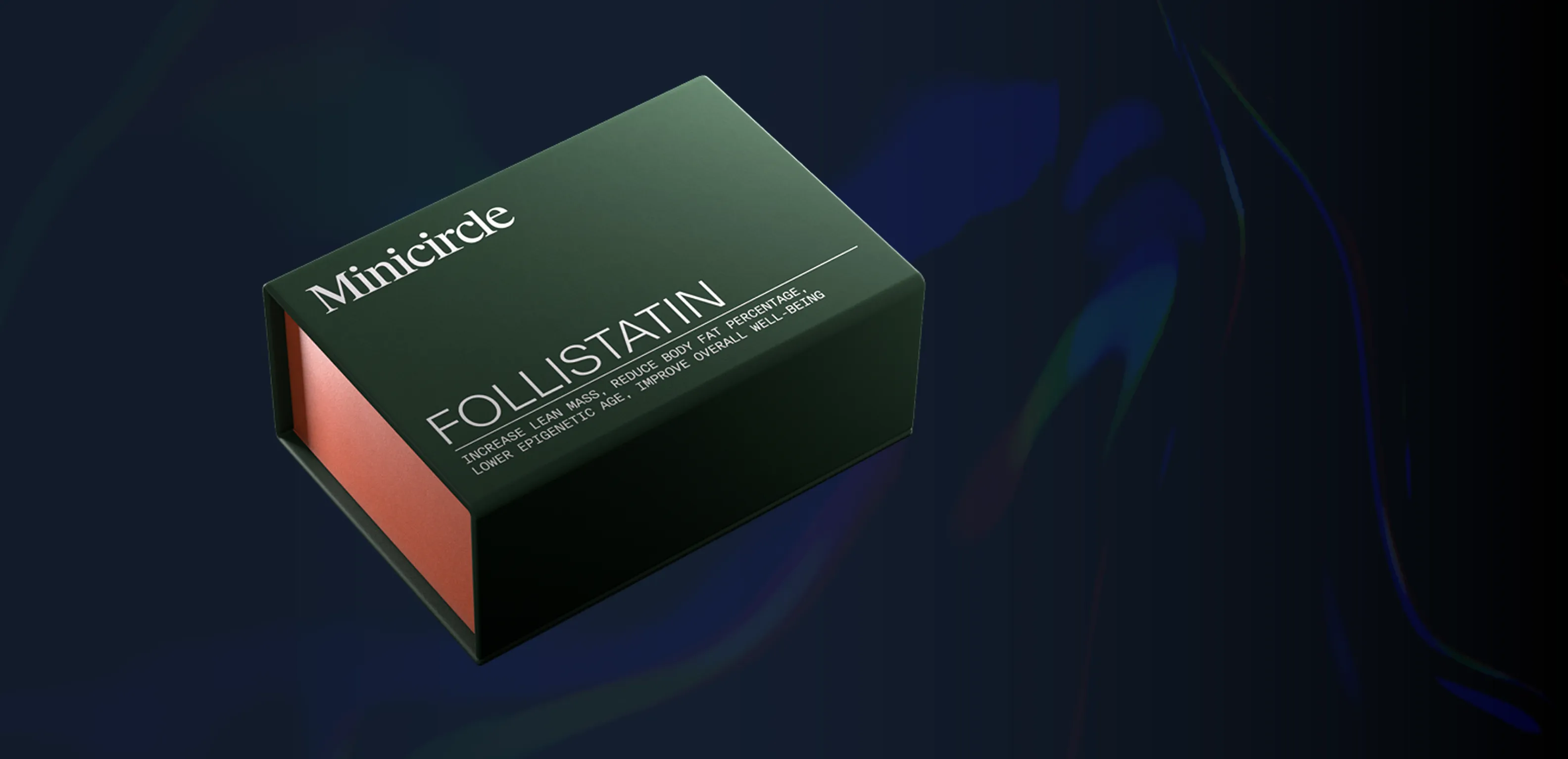
Follistatin

What Is Follistatin?
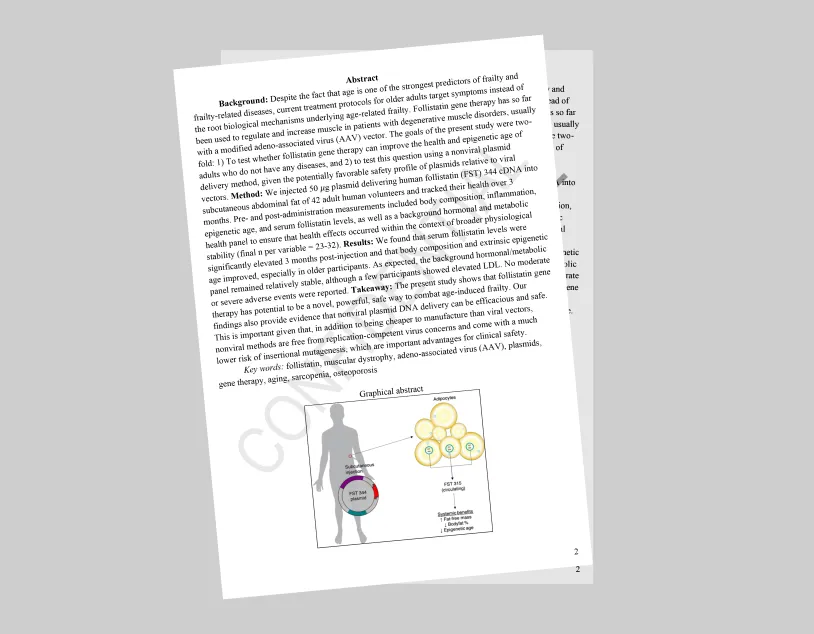
Follistatin gene expression therapy temporarily increases your body's natural follistatin production to:

Build a Stronger Body From the Inside Out
Observed Outcomes
How It Works
Rather than replacing your DNA, gene expression therapy gives your cells a temporary new set of instructions.
Those instructions allow your body to produce additional follistatin protein, which helps regulate two naturally occurring proteins:
Myostatin
Limits muscle growth.

Activin
Contributes to inflammation and metabolic regulation.
More Follistatin
Supports lean muscle development, improved body composition and healthier aging.
Treatment at a Glance
Administration
Simple subcutaneous injection.
No surgery.
No hospitalization.
Duration
Designed to last approximately one year before treatment can be repeated.
Recovery
No downtime.
Most members return to normal activities immediately.

Safety
Because the therapy uses non-viral gene expression technology, it does not permanently modify your DNA.
Clinical studies have reported no serious adverse events. The most commonly observed side effect was a small increase in LDL cholesterol in some participants, which may be managed through diet and lifestyle. Treatment is not recommended during pregnancy or for those planning pregnancy within the following year.
Individual experiences vary. All members complete medical screening before treatment.
How Follistatin Gene Therapy Is Changing Lives


“Before I could only walk slowly while having to rest for a few minutes at a time. Now I am running full miles!”
“I’ve felt an overall sense of increased energy and wellbeing since receiving Follistatin. In the 3 months after the gene therapy, my DEXA scans showed a 3.5% decrease in body fat and increase in lean muscle.”
“[Follistatin] has helped me stay on top of my training. It’s helped me meet new strength goals. Through all of that, it’s also helped me with my recovery goals.”


Explore the Science



Ready to Experience What's Next?
Frequently Asked Questions


Plasmid gene therapy delivers genetic instructions to your cells, enabling them to produce therapeutic proteins internally. Rather than frequent injections of an externally manufactured protein, Minicircle plasmids (circular DNA molecules) prompt the body's own cells to synthesize the proteins. While results may vary, a single injection of plasmid can support protein production for an entire year, depending on the individual's unique biochemistry.
Minicircle's therapy uses a single subcutaneous injection to deliver the therapeutic plasmid.
• The plasmid enters the nucleus but does not integrate into the genome.
• The cell produces the encoded protein (e.g. follistatin (FST)), which circulates in the bloodstream.
• The therapeutic effect depends on the specific protein and the individual's response. For example, FST inhibits myostatin and activin in order to increase lean mass.
Learn more.
Follistatin inhibits myostatin and activin, proteins that suppress muscle growth. By reducing these inhibitors, FST may help support increasing lean muscle mass, decreasing fat mass, and reducing epigenetic age.
Minicircle gene therapies are administered as a single subcutaneous injection by licensed physicians in clinical settings.
In over 500 patients treated to date, Minicircle's FST gene therapy has been well-tolerated. The most common reported side effect has been a slight increase in LDL cholesterol (8mg/dl) in roughly one-third of patients. This increase is not clinically significant and can be managed through diet and lifestyle changes.
No. FST gene therapy is not recommended for individuals who are pregnant or planning to become pregnant within 12 months of treatment.
While effects vary, patients receiving FST therapy report increased lean body mass, decreased fat mass, and improved strength and physical performance.
Recommended assessments include DEXA scans to track body composition changes, as well as performance tracking and physician evaluations. Epigenetic age tests are currently under review. No specific test is officially recommended at this time.
Participants must be 23 years or older based on Institutional Review Board (IRB) guidelines.
Minicircle is preparing clinical trial data for publication. Please subscribe to our newsletter or follow us on social media for updates as data becomes available.